A rediscovery of Moral Beauty?

Paul Vitz once said that in our age we will recover—or rather rediscover—many traditional beliefs and practices, and that we will do so primarily through science and the intellect.

Perhaps this is in that vein?

Dacher Keltner’s (UC Berkeley) forthcoming book Awe describes a study that sought to understand various ways people arrive at an experience of “being in the presence of something vast and mysterious that transcends your current understanding of the world.”

The participants were from 26 countries, including adherents to all major religions, as well as denizens of more secular cultures (e.g., Holland). Our participants varied in terms of their wealth and education. They lived within democratic and authoritarian political systems. They held egalitarian and patriarchal views of gender. They ranged in their cultural values from the more collectivist (e.g., China, Mexico) to the more individualistic (e.g., the United States).

Speakers of 20 languages at UC Berkeley translated the 2,600 narratives they produced. We were surprised to learn that these rich narratives from around the world could be classified into a taxonomy of awe, the eight wonders of life, from collective rituals to sudden intellectual epiphanies.

What most commonly led people to feel awe? Nature? Spiritual practice? Listening to music? In fact, it was other people’s courage, kindness, strength, or overcoming—actions of strangers, roommates, teachers, colleagues at work, people in the news, characters on podcasts, and our neighbors and family members.

Around the world, we are most likely to feel awe when moved by moral beauty: exceptional virtue, character, and ability, marked by a purity and goodness of intention and action
But the Turing test cuts both ways. You can’t tell if a machine has gotten smarter or if you’ve just lowered your own standards of intelligence to such a degree that the machine seems smart. If you can have a conversation with a simulated person presented by an AI program, can you tell how far you’ve let your sense of personhood degrade in order to make the illusion work for you?

Jaron Lanier, in a book published in 2011.

English soccer is worth watching in its own right, but it does not hurt that its commentators have quite the way with words.

Case in point: Peter Drury’s comments following Harry Kane’s 267th goal for Tottenham, surpassing the record previously held by Jimmy Greaves.

He sits on Tottenham’s loftiest perch, beyond even the great Greaves. Spurs’ most lavish scorer of all time. He has dared. And he has done.

Audeat est facere, indeed.

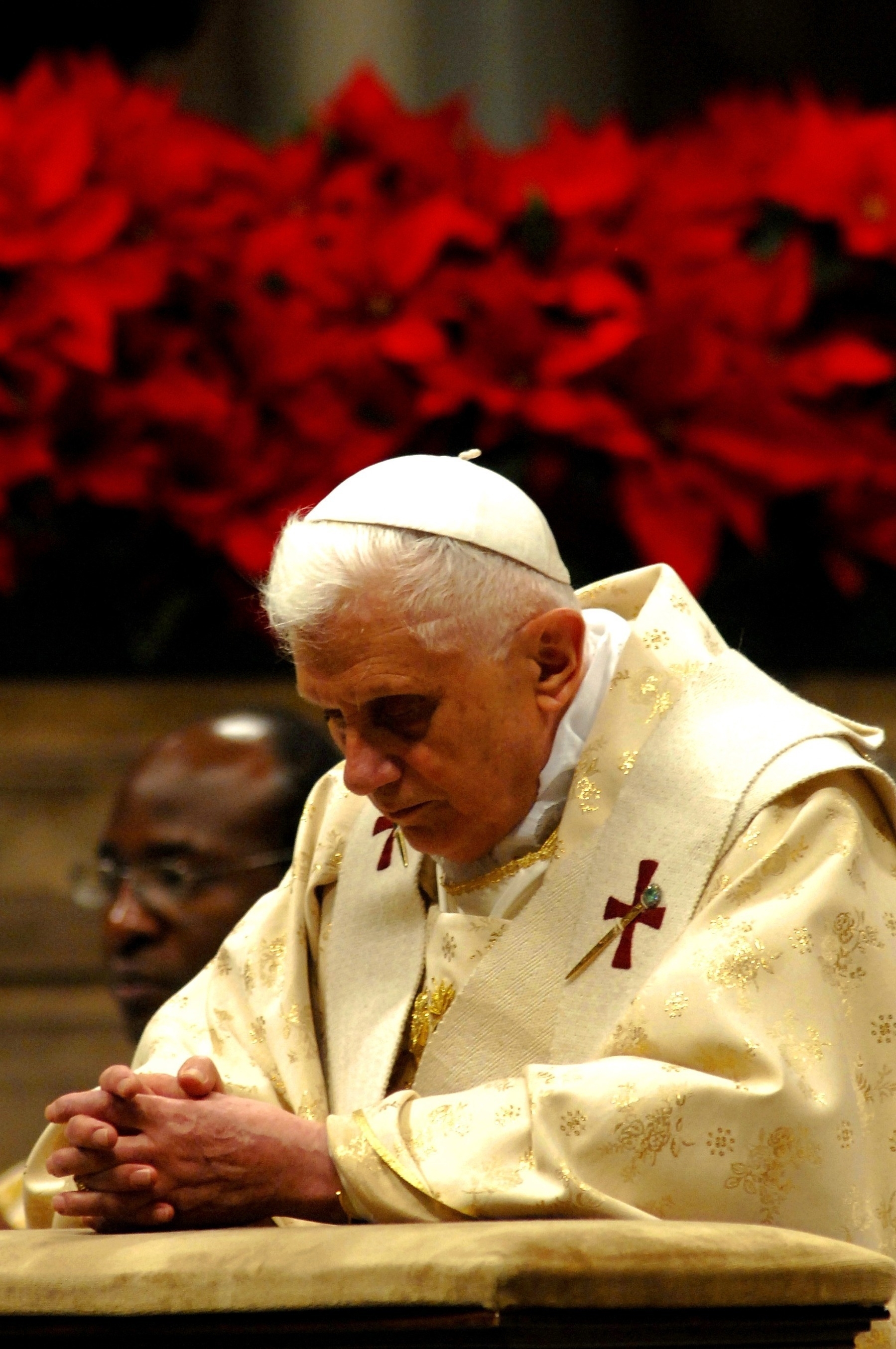
Rest in Peace, Benedict XVI

Quite soon, I shall find myself before the final judge of my life. Even though, as I look back on my long life, I can have great reason for fear and trembling, I am nonetheless of good cheer, for I trust firmly that the Lord is not only the just judge, but also the friend and brother who himself has already suffered for my shortcomings, and is thus also my advocate, my ‘Paraclete.’ In light of the hour of judgment, the grace of being a Christian becomes all the more clear to me. It grants me knowledge, and indeed friendship, with the judge of my life, and thus allows me to pass confidently through the dark door of death.

May you experience fear, trembling, and good cheer, Joseph of Rome.

Requiem aeternam dona ei, Domine, et lux perpetua luceat ei.

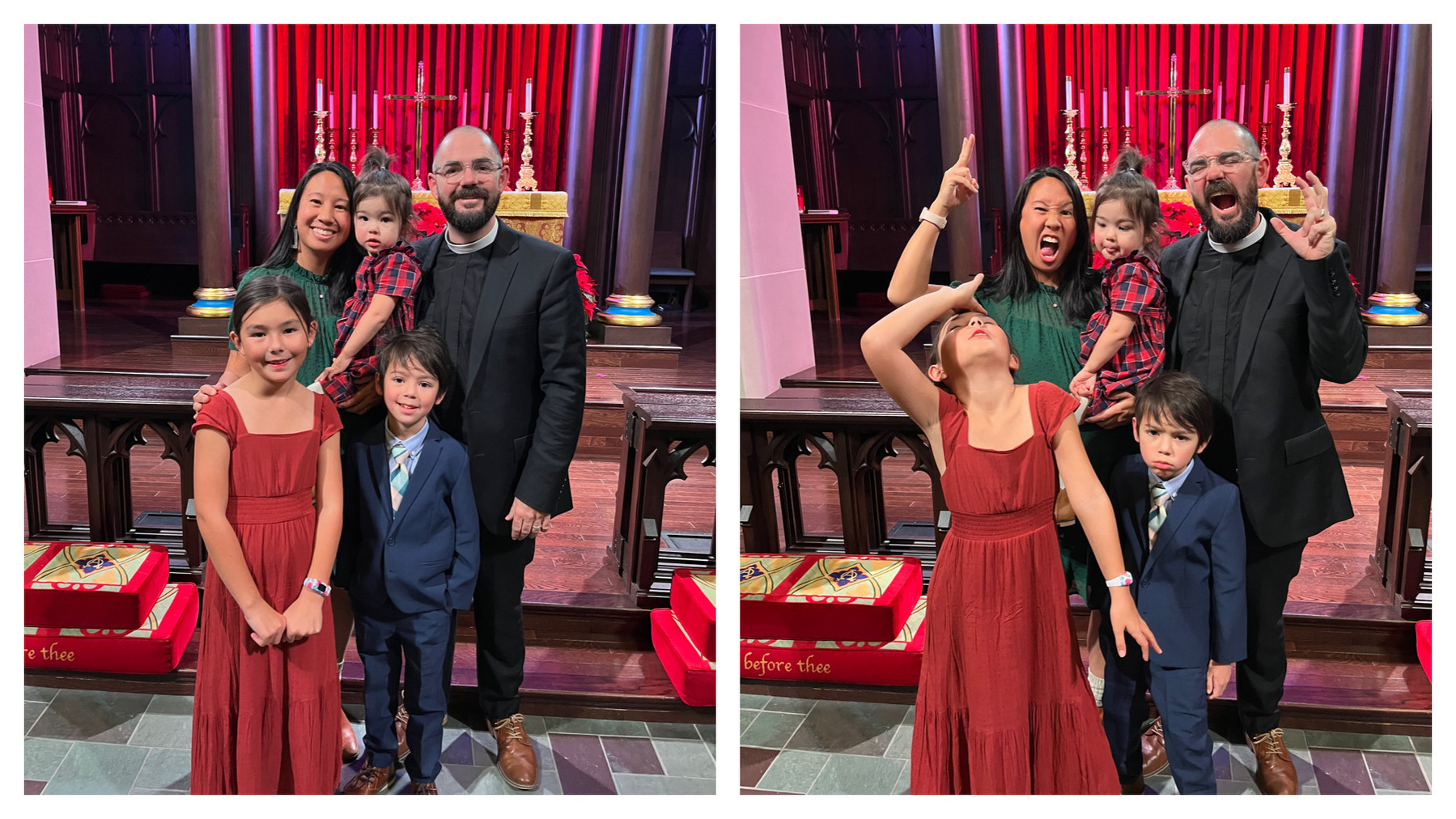
Merry Christmas from the Jordan family. (Shown here in both our forced and natural poses. I will let you determine which is which for each of us…)

O Emmanuel

Come, O God with us

Friends,

The final O Antiphon of Advent is below—in its Latin and English forms. Subscribers can keep reading below the image for a short reflection and another response poem by the brilliant Fr. Malcolm Guite.

I hope these brief moments of reading and reflection have helped you capture the heart of Advent in this busy final week before Christmas.

O Emmanuel

Latin Text
Veni, veni Emmanuel, 
Captivum solve Israel, 
Qui gemit in exilio 
Privatus Dei Filio.

O Come, O Come, Emmanuel Adaptation O come, O come, Emmanuel, And ransom captive Israel, That mourns in lonely exile here, Until the Son of God appear.

A Poetic Response, by Fr. Malcolm Guite

Tomorrow, I will come.

In this final O Antiphon response, Malcolm Guite looks back at the previous six titles for Christ, but he also looks forward, “… beyond Christmas, to the new birth for humanity and for the whole cosmos, which is promised in the birth of God in our midst.”

As a special treat this Christmas Eve, click here to listen to Malcolm read his poem.

O Emmanuel

O come, O come, and be our God-with-us
O long-sought With-ness for a world without,
O secret seed, O hidden spring of light.
Come to us Wisdom, come unspoken Name
Come Root, and Key, and King, and holy Flame,
O quickened little wick so tightly curled,
Be folded with us into time and place,
Unfold for us the mystery of grace
And make a womb of all this wounded world.
O heart of heaven beating in the earth,
O tiny hope within our hopelessness
Come to be born, to bear us to our birth,
To touch a dying world with new-made hands
And make these rags of time our swaddling bands.

O Rex Gentium

Come, O King of Nations

Friends,

Today’s O Antiphon is below—in its Latin, English, and adapted forms. Subscribers can keep reading below the image for a short reflection and another response poem by the brilliant Fr. Malcolm Guite. I hope these brief moments of reading and reflection help you capture the heart of Advent in this busy final week before Christmas.

O Rex Gentium

Latin Text
O rex gentium, et desideratus earum,
lapisque angularis, qui facis utraque unum,
(veni, et) salva hominem quem de limo formasti

English Translation O King of the nations, and their desire, the cornerstone making both one: Come and save the human race, which you fashioned from clay.

O Come, O Come, Emmanuel Adaptation O come, Desire of nations, bind In one the hearts of all mankind; Bid Thou our sad divisions cease, And be Thyself our King of Peace.

A Poetic Response, by Fr. Malcolm Guite

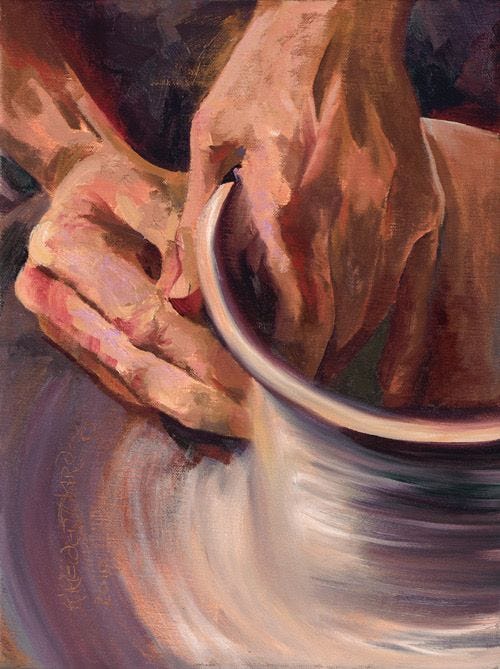
The original Latin version of this O Antiphon draws our focus to the creative nature of the King of Nations. (This is, unfortunately, lost in the hymn adaptation.) Yes, Jesus is the King of all, but he is also the one who formed our very race from clay.

And—as is entirely appropriate on this penultimate day of Advent—Guite draws us to the humility of the King taking on the form of clay in his Incarnation, before reminding us that it is Jesus’ first and second Advents that prepare us for his final Advent.

His work of shaping us is not yet complete.

O Rex Gentium / O King of Nations

O King of our desire whom we despise, King of the nations never on the throne, Unfound foundation, cast-off cornerstone, Rejected joiner, making many one, You have no form or beauty for our eyes, A King who comes to give away his crown, A King within our rags of flesh and bone. We pierce the flesh that pierces our disguise, For we ourselves are found in you alone. Come to us now and find in us your throne, O King within the child within the clay, O hidden King who shapes us in the play Of all creation. Shape us for the day Your coming Kingdom comes into its own.

O Oriens

Come, O Dayspring

Friends,

Today’s O Antiphon is below—in its Latin, English, and adapted forms. Subscribers can keep reading below the image for a short reflection and another response poem by the brilliant Fr. Malcolm Guite. I hope these brief moments of reading and reflection help you capture the heart of Advent in this busy final week before Christmas.

O Oriens

Latin Text
O Oriens, splendor lucis aeternae,
et sol justitiae:
veni, et illumina sedentes
in tenebris, et umbra mortis

English Translation O Dayspring, splendour of light eternal and sun of righteousness: Come and enlighten those who dwell in darkness and the shadow of death.

O Come, O Come, Emmanuel Adaptation O come, O Bright and Morning Star, and bring us comfort from afar! Dispel the shadows of the night and turn our darkness into light.

A Poetic Response, by Fr. Malcolm Guite

The "Bright and Morning star" or "Dayspring" refer to the first ray of light appearing when the darkness of night is pierced by the sunrise. The beauty of the first trace of the sunrise has captured the attention of poets for millennia, from the prophet Malachi's "sun of righteousness" to Francis Scott Key's "by the dawn's early light."

It is no accident that the Church prays O come O Bright and Morning Star on December 21st. This is the winter solstice; the day that contains the shortest period of daylight and the longest night of the year. And on this winter solstice, Fr. Guite's poem helps us remember that Jesus is our Bright and Morning Star.

O Oriens / O Dayspring
First light and then first lines along the east
To touch and brush a sheen of light on water
As though behind the sky itself they traced

The shift and shimmer of another river Flowing unbidden from its hidden source; The Day-Spring, the eternal Prima Vera.

Blake saw it too. Dante and Beatrice Are bathing in it now, away upstream… So every trace of light begins a grace

In me, a beckoning. The smallest gleam Is somehow a beginning and a calling; “Sleeper awake, the darkness was a dream

For you will see the Dayspring at your waking, Beyond your long last line the dawn is breaking”.