My wife returned this weekend from a two week pilgrimage on the Camino de Santiago. My latest piece at Covenant is about my experience trying to walk the pilgrim way while caring for our kids here at home.
It was my own Camino de Solo Dad.
My wife returned this weekend from a two week pilgrimage on the Camino de Santiago. My latest piece at Covenant is about my experience trying to walk the pilgrim way while caring for our kids here at home.
It was my own Camino de Solo Dad.
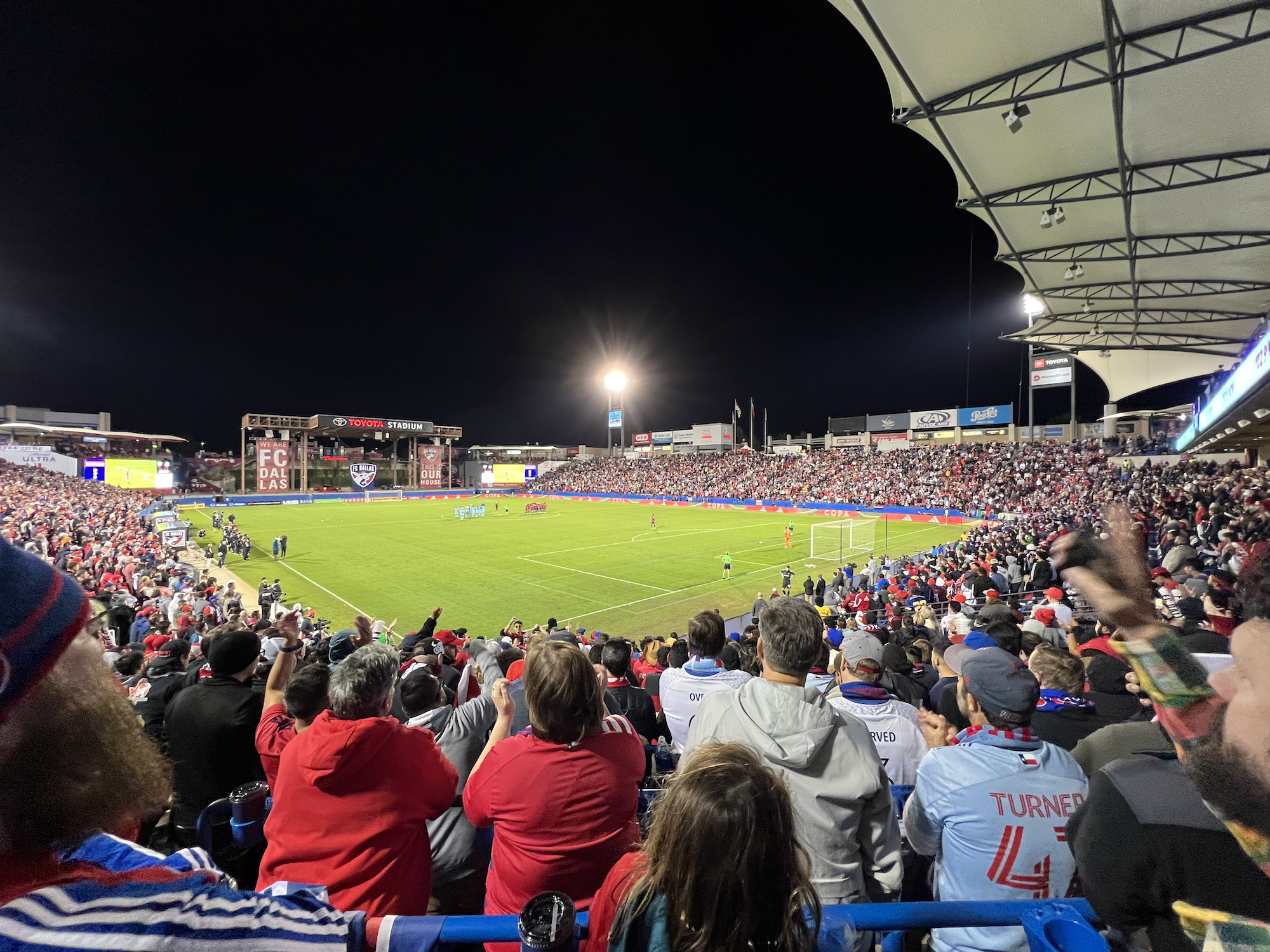
I do not love it when a match is decided by PKs—they are a terrible way to lose—but it was quite the experience being in the stands last night when FC Dallas advanced on Velasco’s Panenka.
What’s a Panenka, you ask?
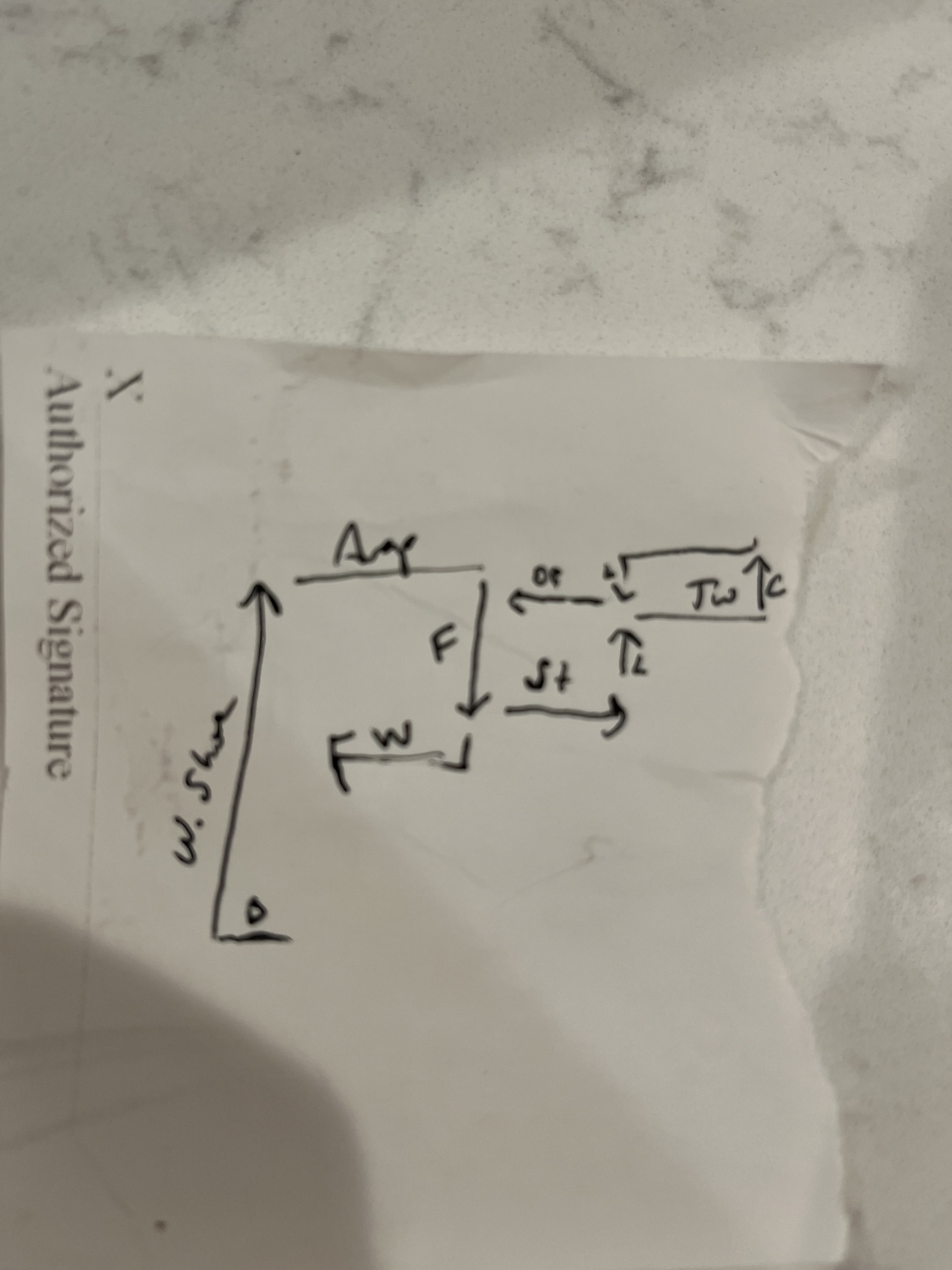
The two teams I support most have coaches who insists on their “System” even when the results are not (yet/always?) positive.
I trust Conte when he says “trust the system” more than I do when Berhalter says the same. Here’s hoping for a surprise on the later come World Cup time!
The seven day week as a microcosm of the Church Calendar. Read more here.

The Church Calendar, beginning with the first Sunday of Advent and concluding with the Feast of Christ the King, is an intentional re-living of the life of Christ year after year.
In Advent we anticipate his Incarnation that we celebrate throughout Christmas. In Epiphany we recognize the many ways he revealed his true nature throughout the Gospels. In Lent we enter with him into the period of fasting in the wilderness. Holy Week is a slow, purposeful walk through the final week of his life. Easter—the longest of the Holy Seasons!—is a feast celebrating the resurrection of our Lord.
To follow the Church Calendar is to re-live the life of Jesus every year of your life.
But there are some things worth doing not just every year, but every week.
For as long as the Church has been the Church, Christians have used the natural rhythm of the seven day week to be formed—week after week—increasingly into the image of Jesus.
The seven day week serves as a microcosm of the Church Year.
So what is the seven day rhythm of the Christian week?
The Didache is a first century text that describes many areas of life for at least one early Christian community. Here is what it says about fasting:
But let not your fasts be with the hypocrites, for they fast on the second and fifth day of the week. Rather, fast on Wednesday and the Preparation (Friday).
In this specific church manual, the reality that Christians were regularly fasting was understood. The Didache simply gives a prescription for when to do so: Wednesdays and Fridays.
Why?
It was on Wednesday that Judas planned the betrayal of Jesus, and it was on Friday that he was crucified.
Throughout the ages, certain days of the week have been given special treatment by Christians, and these days often come with a prescription of sorts.
Not every day of the week has a set purpose or practice. The same is true of the Church Year, too. There are Holy Seasons and Holy Days, but there are plenty of ordinary days throughout the year also.
After all, if every day is special … then no day is really special.

Habit to Adopt: Over the centuries, Wednesdays, Fridays, Saturdays, and Sundays have held a special place in the lives of the faithful. This year, pick one of the days below to specially observe on a weekly basis.
Wednesdays: Fast. This can be a skipped meal, or fasting from a particular type of food, like meat, sugar, or coffee. Or you could avoid eating all day. As you fast, keep in mind that one benefit of fasting is that you are strengthening your moral “no” muscle, or what the ancients called Temperance. As you say “no” when it doesn’t really matter—skipping a meal, for example—you are increasing your ability to say “no” when it matters most.
Fridays: Fast, and remember the Cross. Similar to Wednesday, Christians have often fasted on Fridays. This is most culturally noticeable throughout the season of Lent, when the McDonald’s Filet-o-fish returns to prominence. A collect for Fridays is below, and would be a wonderful prayer to say throughout your Fridays.
Almighty God, whose most dear Son went not up to joy but first he suffered pain, and entered not into glory before he was crucified: Mercifully grant that we, walking in the way of the cross, may find it none other than the way of life and peace; through Jesus Christ our Lord. Amen
Saturdays: Rest, and prepare for Sunday Worship. This could take the form of a day-long rest—like fasting from a smartphone or screens—or it could be a simple act of preparation, like reading the lectionary texts for Sunday’s sermon or setting out clothes and making a simple breakfast ahead of time in order to make the “get ready for Church” routine a little less hectic. A collect for Saturdays is below, and would be a wonderful prayer to say as you prepare.
Almighty God, who after the creation of the world rested from all your works and sanctified a day of rest for all your creatures: Grant that we, putting away all earthly anxieties, may be duly prepared for the service of your sanctuary, and that our rest here upon earth may be a preparation for the eternal rest promised to your people in heaven; through Jesus Christ our Lord. Amen.
Sunday: Celebrate the Resurrection, and launch into the week. While there are countless biblical topics covered in Sunday services and classes, the Sunday gathering of the faithful is chiefly a celebration of the Resurrection of our Lord. Similarly, it is our weekly celebration of the Resurrection that equips us for the week ahead. Two prayers help capture these things. The first is a general collect for Sundays, and the second is the Post Communion Prayer: the final words prayed by the congregation before the service ends. Whether your church says these prayers or not, consider doing so yourself as you seek to more fully celebrate Sunday.
God, you make us glad with the weekly remembrance of the glorious resurrection of your Son our Lord: Give us this day such blessing through our worship of you, that the week to come may be spent in your favor; through Jesus Christ our Lord. Amen.
Eternal God, heavenly Father, you have graciously accepted us as living members of your Son our Savior Jesus Christ, and you have fed us with spiritual food in the Sacrament of his Body and Blood. Send us now into the world in peace, and grant us strength and love and serve you with gladness and singleness of heart; through Christ our Lord. Amen.
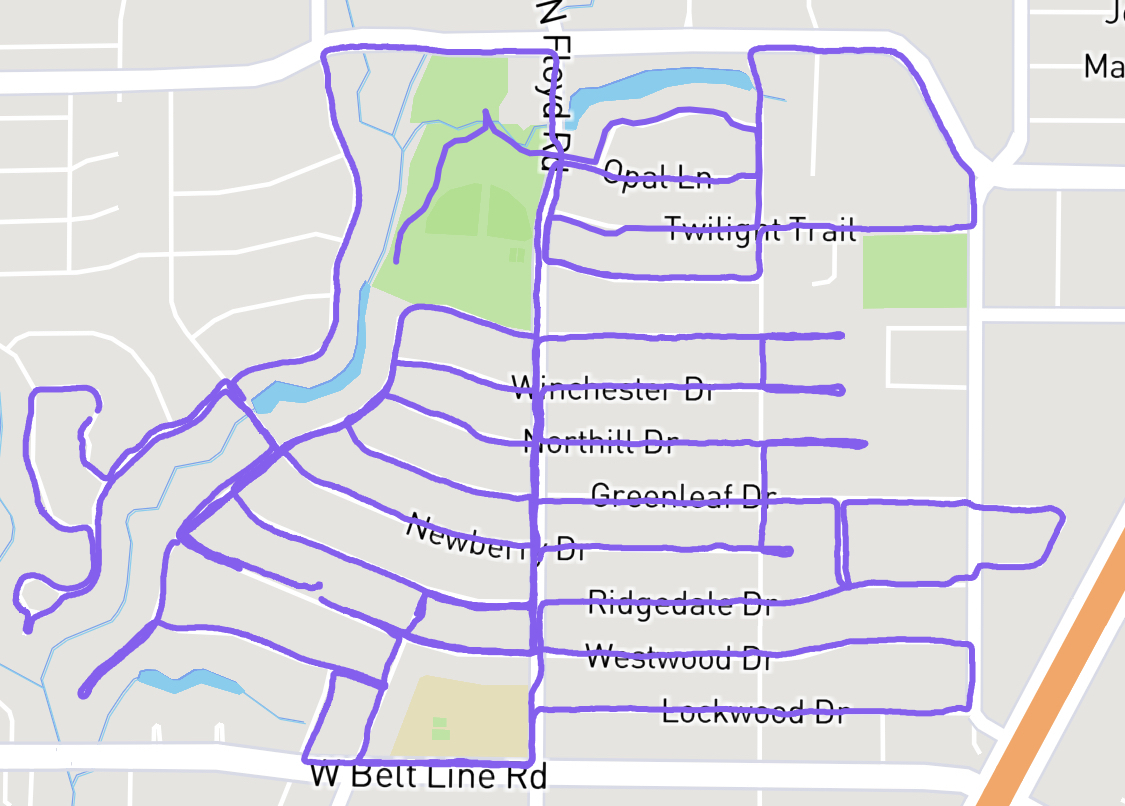
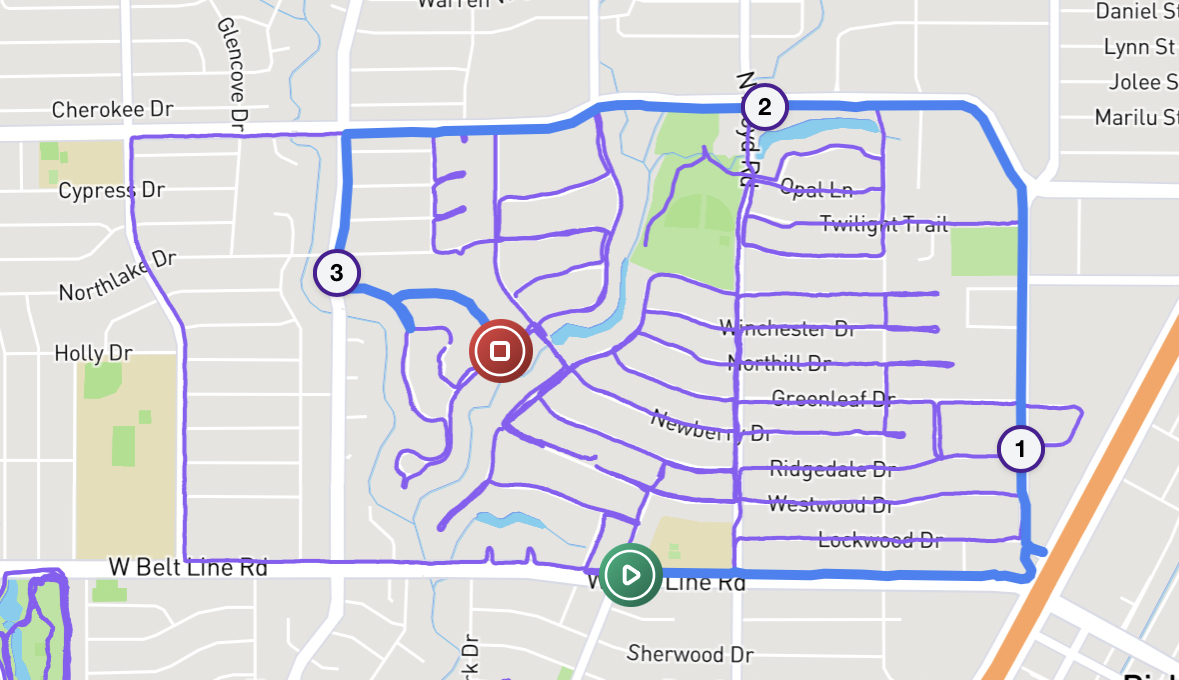
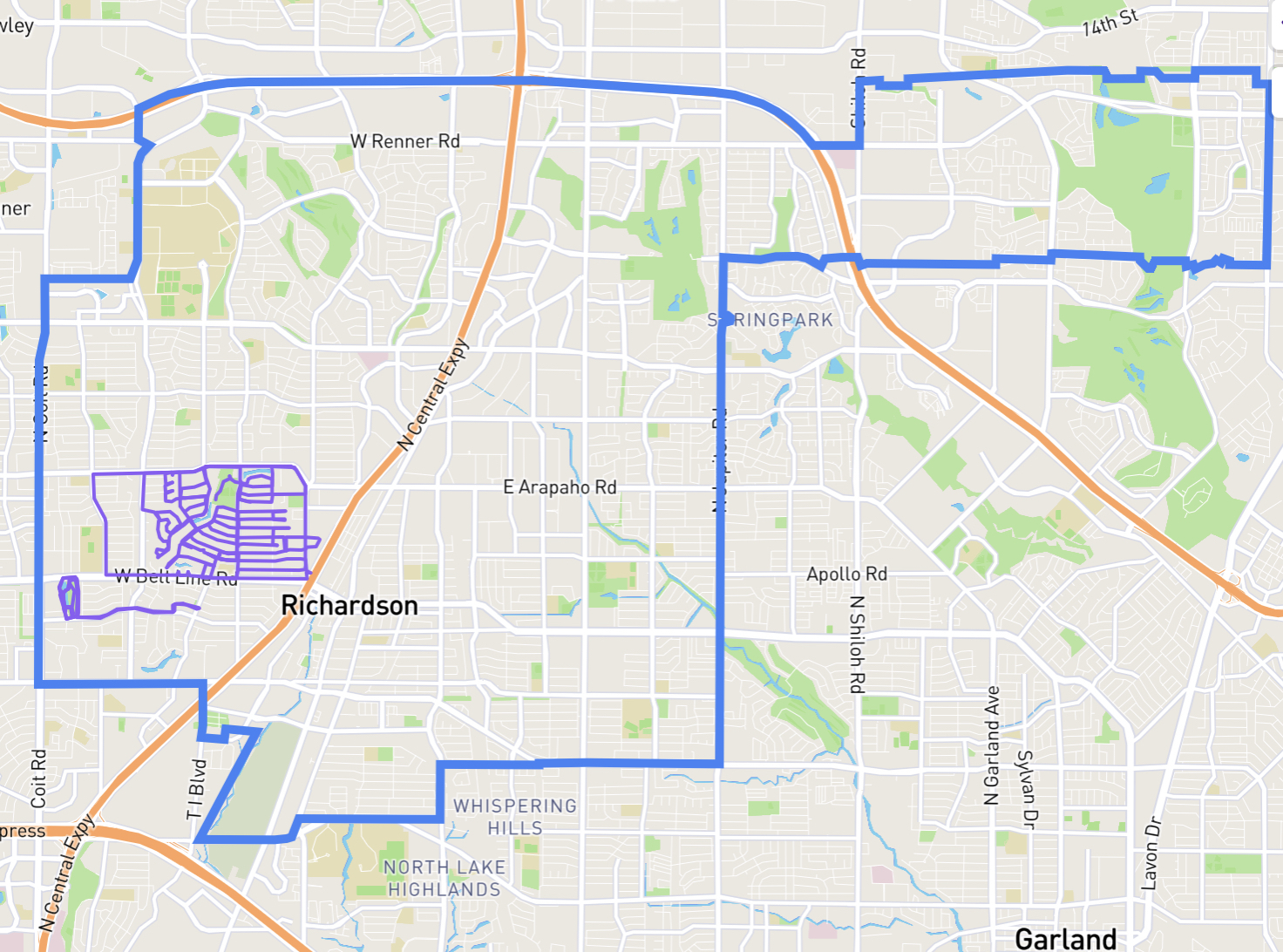
Slowly but surely, my Run Thy Neighborhood project continues. Today’s run completed the outer frame of a neighborhood and a half, and a few missing street portions. Still a long way to go: I have completed 29/1240 Richardson streets so far.
(Literally) One step at a time.

In the preface to his infamous Screwtape Letters, C.S. Lewis notes the following about our attitudes towards heavenly beings.
There are two equal and opposite errors into which our race can fall about the devils. One is to disbelieve in their existence. The other is to believe, and to feel an excessive and unhealthy interest in them. They themselves are equally pleased by both errors and hail a materialist or a magician with the same delight.
On the one hand, ours is an age that values the physical and material world around us. To the materialist, the world is what you can experience and observe: atoms, molecules, nature, etc. This world is explained in scientific terms; we hold things to be true if we can empirically verify them in a laboratory. The world of spirits, angels, and demons is often billed as a thing of the past — a primitive view of the world suited only for primitive humanity.
On the other hand, even in this overly-materialistic world, our wider culture is drawn to the supernatural. Many of the most popular films and television series tread into the realm of magic and spirits; they are populated with dragons and elves. Production companies do not spend a fortune on a television series unless they somehow know that it will strike a nerve with a wide audience.
(And, as someone who once dressed up as Frodo for the DVD release of The Two Towers, I can attest to the reality that these fantasy worlds can really strike a nerve with a subset of that wider audience!)
Wherever you land on angelic beings—an ardent materialist who denies their existence, or as one who perhaps takes “an excessive and unhealthy interest in them”—the Feast of St. Michael and All Angels has something for you.
In the biblical languages, an angel is simply a messenger from God. Angels are not at the forefront of the story of Scripture, but they certainly feature in a few key moments on earth and in a few key glimpses into heaven.
It is worth noting that throughout Scripture it is not uncommon for angels to begin their message to God’s people with the words, “Do not fear.” This should tell us something about their physical appearance. Cute babies with wings appearing to you in a dream do not need to lead with, “Don’t be afraid of me” do they?
(On second thought … maybe they do!)
Most angelic beings are not mentioned by name in the Scriptures. Joseph, for example, is visited by many unnamed beings bearing the title “angel of the Lord.”
Chief among the angels that are mentioned by name are Michael and Gabriel. In Scripture and the tradition, Michael is considered the greatest of the archangels. He is credited with defeating Lucifer in the war in heaven (Rev. 12:7-9). His name is mentioned twice in the OT and twice in the NT, and numerous other times in apocryphal literature. Gabriel is most well known for his announcement to the Virgin Mary that she will bear the Son of God, but appears also to Daniel in the Old Testament and Zechariah in the New Testament.
Biblical angels appear to have different roles: Michael protects, and Gabriel announces. Countless other angels of the Lord fulfill other duties.
So what does all of this information about angels have to do with our own formation?
There are times when God protects, communicates, or guides us in inexplicable ways.
As people who aim to have the story of Scripture engrained in our lives, we should be open to the reality that this protection, communication, and guidance may be the work of “an angel of the Lord.”
Habit to Adopt: An increased awareness of the angelic and demonic realms is not necessarily a habit, is it? But perhaps each year on the Feast of St. Michael and All Angels you can make it a practice to pray a thanksgiving for the work of angels. Year after year, this reminder may help you grow in our ability to trust that the unseen is as real—if not more so—than the seen.
Everlasting God, you have ordained and constituted in a wonderful order the ministries of angels and mortals: Mercifully grant that, as your holy angels always serve and worship you in heaven, so by your appointment they may help and defend us here on earth; through Jesus Christ our Lord, who lives and reigns with you and the Holy Spirit, one God, for ever and ever. Amen.
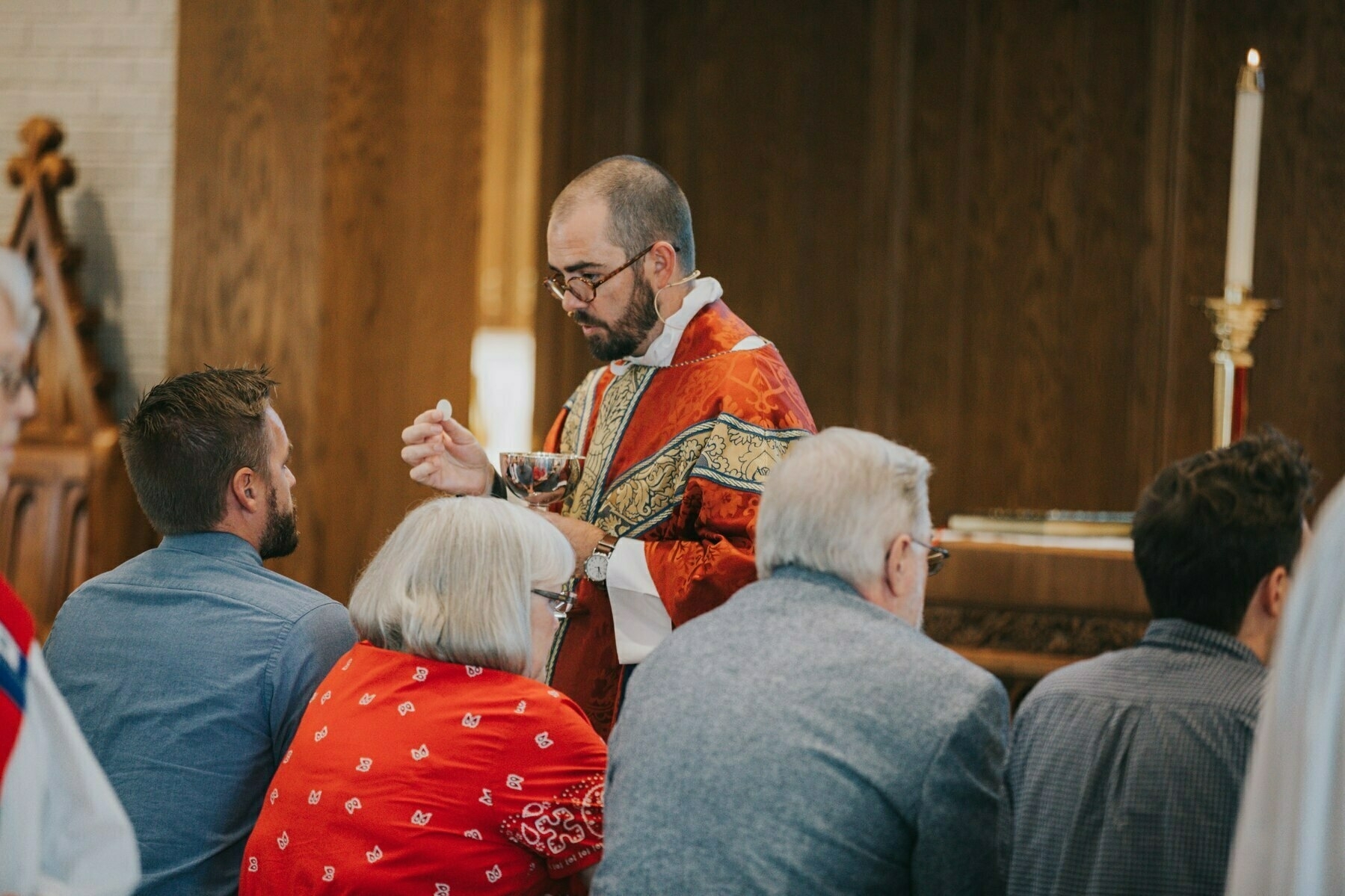
Three years ago today I was ordained a Priest in the Episcopal Diocese of Dallas.
The USAMNT proceeded to cough the ball up 54 times inside their own half in the first half alone. Think about that for a minute and it becomes almost impressive: they gave the ball away 1.2 times per minute. Unfathomable.
Ouch. But it’s just a friendly, right? RIGHT???
My Run Thy Neighborhood goal hit a first milestone today: Heights Park (my actual neighborhood) is complete. On to Arapaho Heights next!