Intro 2: Why We Need Habits

Becoming like Jesus by adopting his pattern of life

On Thursday, January 15th, a miracle took place in New York. Or so some people say. Flight 1549 took off from LaGurdia headed for Charlotte, NC only to run into a flock of geese minutes later. The damage to the engines was extensive, and it soon became clear that an emergency landing on the Hudson River was the safest course of action.

In a matter of minutes a number of crucial maneuvers needed to happen in order to avoid a disaster. The Captain and the Co-pilot had to shut down the engines, set the right speed so that the plane could glide as long as possible without power. They had to get the nose of the plane down to maintain speed, but then get it back up again before hitting the water. They had to disconnect the autopilot, override the flight management system, and activate the ditch system which seals vents and valves to make the plane waterproof. Perhaps most importantly of all, they had to glide the plane towards a sharp left-hand turn so that they could land the plane facing south, going with the current of the river. Then they had to level the plane from the tilt of the turn, so that on landing it would be exactly level.

This is a small list of some of what happened in the span of just a few minutes. And as you know, everyone survived the landing. Newspaper headlines across the world described this event as the Hudson River Miracle.


Gary Player, the great South African golfer, was once asked by a reporter after a particularly impressive round if he felt lucky that day.

“Sure,” he responded. “But I’ve noticed that the more I practice, the luckier I seem to be.”1


These two stories—ones I first heard packaged together by N.T. Wright years ago—tell us something about ourselves and the air we breathe: our culture values spontaneity. We prefer a spontaneous miracle, like the successful landing of Flight 1549, and a spontaneous performance, like Gary Players’ amazing round of golf.

But what actually happened in each circumstance? When we look past the headlines and beyond the events themselves, what do we find?

Oddly enough, we find the same thing in both stories:

Decades of training that led to the acquisition of habits that led to an embodiment of goodness when it mattered most.

Learning to do Anything Well

How is it that you learn to do anything well?

What does it take to become a great athlete?

A regimented diet. An exercise routine. A coach, or two, or three. A goal. Practice.

How do you learn an instrument? A new skill? A new language? How do you learn to walk? To speak? To listen in a way that your wife knows you are actually listening? (I’m genuinely asking here …)

None of these things “just happen.” They take work. They take effort. And sometimes they take a lifetime of work and effort to see any real fruit. This is simply how God has created us to learn and grow.

But here is where we sometimes stop thinking clearly about our faith:

What does it take to be a great Christian? In other words: What does it take to respond properly to the free grace we have been given in Christ?

Does it take work? Does it take effort? Does it take a regimented day? Or a coach, or two, or three?

Or does it just “happen?”

More often than not, I think you and I trick ourselves into thinking it just happens.

Jesus and Habits

Consider the following passage from the Gospel of Matthew

Then he made the disciples get into the boat and go before him to the other side, while he dismissed the crowds. And after he had dismissed the crowds, he went up on the mountain by himself to pray. When evening came, he was there alone, but the boat by this time was many furlongs distant from the land, beaten by the waves; for the wind was against them. And in the fourth watch of the night he came to them, walking on the sea. But when the disciples saw him walking on the sea, they were terrified, saying, “It is a ghost!” and they cried out for fear. But immediately he spoke to them, saying, “Take heart, it is I; have no fear.”

And Peter answered him, “Lord, if it is you, bid me come to you on the water.” He said, “Come.” So Peter got out of the boat and walked on the water and came to Jesus; but when he saw the wind, he was afraid, and beginning to sink he cried out, “Lord, save me.” Jesus immediately reached out his hand and caught him, saying to him, “O man of little faith, why did you doubt?” And when they got into the boat, the wind ceased. And those in the boat worshiped him, saying, “Truly you are the Son of God.”

Matthew 14:22-33

There are a number of startling features scattered throughout this familiar Gospel account. This passage includes a ghost sighting and humans walking on water. If I was one of the disciples, those are moments I would never forget.

As I spend more time with this passage, I think the real surprise might just be found in verse 23: Jesus himself took time out of his day to pray.

Now I am too committed to reading the Bible on its own terms to pretend that this is the main point of the passage. It probably isn’t even one of the main points of the passage.

But this sort of thing happens often enough throughout the Gospel narratives that it is worth spending some time considering for a moment: The reality is that Jesus regularly stops what he is doing, goes off by himself, and prays. And he does this even when surrounded by crowds that desperately need his healing and teaching. And I, at times, find this surprising.

Jesus did this constantly. Despite his mission and work, he developed a habit of prayer. We are called, above all else, to become like him.

We have no reason to believe that God will make us more like Jesus simply by zapping us with supernatural, no-effort-on-our-part holiness.

We want convenient store holiness. Conveyor belt holiness. Amazon Prime two-hour free delivery holiness. But the pages of the New Testament are full of calls to “work out our salvation with fear and trembling.” To “train ourselves for godliness.” You would have to search far and wide to find a command in Scripture to “sit and wait while God makes you holy through no effort of your own.”

Nearly forty years ago Eugene Peterson was able to diagnose one of our culture’s greatest collective diseases today: our preference for the cheap, and the casual, and the instantly-available:

“One aspect of our world that I have been able to identify as harmful to Christians is the assumption that anything worthwhile can be acquired at once. We assume that if something can be done at all, it can be done quickly and efficiently.”

So if becoming like Jesus does not happen in an instant, how does it happen? If it is not something that can be done quickly, and efficiently, how can it be done?

I have not read many recent authors who have answered these types of questions better than the late Dallas Willard.

“We can become like Jesus by doing one thing—by following him in the overall style of life he chose for himself.”

To become an athlete, you need to live the way an athlete lives: dedicating hour after hour each day to practicing mundane physical actions. Submitting your desires for food, for entertainment, and for sleep to your true desire to become a great athlete. You need to develop the habits of an athlete.

To become a musician, you need to live the way a musician lives: dedicating hour after hour each day to the practice of mundane physical actions. Sacrificing time with family and friends to study music theory. Committing to spend more time practicing music this year than you did last year. You need to develop the habits of a musician.

And to become like Jesus, you need to live the way Jesus lived: dedicating serious time each day to the studying of Scripture. Sacrificing time that you could be spending doing something really good to go off by yourself to pray.

To become like Jesus you and I need to develop the habits of Jesus.

Habits and Ritual

Spiritual disciplines are good works. They are the type of things we are called to do as followers of Jesus. When we structure our lives to include these good works on a regular basis, we are developing habits that God uses to make us more like Jesus.

At this point you might be on board with developing habits that make you more like Jesus. This is great. What I’m worried about is all of this becoming ritualistic.

If this is your fear, I have good new and I have bad news.

So here is the bad news first: If you develop these habits the way the Bible commands, it will become ritualistic. But the good news is that this is actually good news.

Rituals are simply prescribed and communal habits.

They are prescribed, meaning that someone else came up with them. You and I didn’t invent the habit of reading Scripture daily, or feeding the poor, or fasting. When we participate in these habits, we are being incredible unoriginal. This is one of the beauties of Christianity: it is a revealed religion. We are not left on our own to wonder what God expects of us.

Rituals are also communal. When a community of Christians commits to practicing these habits together, they are participating in a ritual.

Behind your initial concern about these practices becoming ritualistic is a valid caution: like anything else in life these habits can become empty. This is a real concern — one that will be addressed throughout the book.

But let’s be honest. Our problem is not that we are faithfully living out the Christian life and have found these practices empty. If that is the case, you are reading the wrong book. Our problem is that we know we should be developing these habits, and on one level we wantto develop these habits, but we simply don’t.

If this is you, keep reading.

Rhythms of Habit is a reader-supported publication. To receive new posts and support my work, consider becoming a free or paid subscriber.

Intro 1: Why Holiness Matters

"Works" is not a dirty word

Let your light so shine before men, that they may see your good works and give glory to your Father who is in heaven. Matthew 5:16

Beware of practicing your piety before men in order to be seen by them; for then you will have no reward from your Father who is in heaven. Matthew 6:1

When we were pregnant with our first baby, my wife and I decided that we did not want to find out the sex until our child was born. To be honest, we both wanted a girl. We tried not to share this publicly, but in the privacy of our home we felt the freedom to express it often.

We finally finished preparing the nursery the day before we went to the hospital. That evening, before we went to bed, I walked towards the door of the nursery, leaned my head inside the empty room, and said, “Ok, Zoë. It’s time to go to sleep. Tomorrow is your first day at Daddy’s school! I love you; goodnight.”

Rhythms of Habit is a reader-supported publication. To receive new posts and support my work, consider becoming a free or paid subscriber.

At this point I had been teaching for a number of years at a local Classical Christian school, and I was already counting down to the day when I would be able to take my daughter to this school that I had grown to love. I didn’t know for sure that we would be having a daughter, and I didn’t know for sure that I would still be working for the school when she was old enough to attend, but a dad can dream.

The next day I had the joy of announcing the birth of our child to family and friends. “It’s Zoë Ly!” We had a daughter, and my dream was one step closer to being fulfilled.

Four years later I told this entire story to Zoë on the eve of her first day of attending Daddy’s school. I shared every detail. I tried to communicate the fact that I had been waiting more than four years for this day to finally arrive, and how excited I was to drive her to school, sneak into her classroom on occasion, and even stop by and see her during lunch. After a five-minute conversation with Zoë, I closed with this line:

“Tomorrow we will wake up, eat breakfast, drive to school, and spend our first of many daddy-daughter school dates together!”

Her response summed up all that it means to be four years old.

“What are we eating for breakfast? Can we have pancakes?”

Toddlers are masters at selective hearing.

Listening to the Bible

Christians are no strangers to the concept of being selective hearers. This may be especially clear in many Protestant readings of Matthew 6:1. It seems that “Beware of practicing your piety before men in order to be seen by them” has been truncated to “Beware of practicing your piety.” Period. Done. I don’t want to rely on my works for salvation, so I will make sure not to do any. Others may choose to listen to a little bit more of the verse, “Beware of practicing your piety before men.” I would serve sacrificially like those people, but then others would see me. Doesn’t that defeat the purpose?

We take a warning against doing something in public with improper motives and make it into a warning against doing anything period.

Works has become a dirty word.

This notion, however prevalent it may be in many circles today, is completely foreign to the world of the New Testament. In fact, this notion is foreign to the rest of the Sermon on the Mount, the very sermon that Matthew is quoting in Chapter 6.

If we were to be better hearers of Scripture, we would always read Matthew 6:1 in light of the rest of the Sermon on the Mount (Matthew 5-7). And when we do this, we notice that moments before warning against “practicing your piety before men in order to be seen by them,” Jesus teaches us to “let our light shine before others, so that they may see our good works and give glory to our Father who is in heaven.”

And when we read 6:1 in light of 5:16 we notice that doing good works is not the problem. Doing good works in front of other people is not even the problem. And, perhaps to our surprise, it also appears that doing good works in front of other people hoping that they will see the good works happening is still not the problem. So what is the problem? What are we to avoid?

We are to avoid doing good works in front of others in order for us to be seen by them. The good works themselves, according to 5:16, are actually meant to be seen. We, according to 6:1, are not. This is a subtle, but important distinction. Does this mean that we should always act as anonymously as possible? Probably. Does this mean that we should avoid announcing our good works before, during, and after we complete them? I happen to think so. But is there any hint that good works themselves should be avoided? Certainly not.

As we are reminded countless times throughout Scripture, it seems that once again it comes down to a difference of attitude, not of action.

For many of us, this is not breaking news. Intellectually, we get it. I am supposed to do good works, but I shouldn’t do them for the wrong reasons. But more often than not, we use this correct reasoning to avoid putting any effort or work into our Christian faith. We “play it safe” by avoiding the pursuit of growing in our ability to do good works year after year in order to avoid doing anything with improper motivation. And reading only part of Matthew 6:1, we use the Scriptures themselves to justify our lack of effort.

If this rings true in your own life, as it does in mine, do not beat yourself up about it. Allow the conviction to set in, but keep this in mind: there is something good about our tendency to be cautious when it comes to thinking about good works. Jesus, who knows what it means to be human, has good reason to warn us to avoid doing good works for the wrong reason.

But that being said, if you lean towards a negative view of works — if works has become a dirty word for you — then consider the following selection the beginning of a renewed understanding of how the New Testament talks about good works.

Now there was at Joppa a disciple named Tabitha, which means Dorcas. She was full of good works and acts of charity. Acts 9:36 

For we are his workmanship, created in Christ Jesus for good works, which God prepared beforehand, that we should walk in them. Ephesians 2:10

Let us hold fast the confession of our hope without wavering, for he who promised is faithful; and let us consider how to stir up one another to love and good works, not neglecting to meet together, as is the habit of some, but encouraging one another, and all the more as you see the Day drawing near.

Galatians 6:9 And let us not grow weary in doing good, for in due season we shall reap, if we do not lose heart. Hebrews 10:23–25

As for the rich in this world, charge them not to be haughty, nor to set their hopes on uncertain riches but on God who richly furnishes us with everything to enjoy. They are to do good, to be rich in good deeds, liberal and generous, thus laying up for themselves a good foundation for the future, so that they may take hold of the life which is life indeed. 1 Timothy 6:17–19

Show yourself in all respects a model of good deeds, and in your teaching show integrity, gravity, and sound speech that cannot be censured, so that an opponent may be put to shame, having nothing evil to say of us. Titus 2:7–8

I desire you to insist on these things, so that those who have believed in God may be careful to apply themselves to good deeds; these are excellent and profitable to men. Titus 3:8

Maintain good conduct among the Gentiles, so that in case they speak against you as wrongdoers, they may see your good deeds and glorify God on the day of visitation. 1 Peter 2:12

What does it profit, my brethren, if a man says he has faith but has not works? Can his faith save him? If a brother or sister is ill-clad and in lack of daily food, and one of you says to them, “Go in peace, be warmed and filled,” without giving them the things needed for the body, what does it profit? So faith by itself, if it has no works, is dead. James 2:14-17

Why, despite the witness of the New Testament, do we still believe that good works are to be avoided, protected against, or even repented of? There are plenty of good answers to that question, but for now it is worth exploring one of them: we have blurred the incredibly important distinction between works and merit.

Works and Merit

When you encounter the word works or deeds in the Scriptures, you are simply encountering a word meaning “something that is done.” These words themselves do not carry a negative or positive connotation. This is why the Scriptures will usually describe what kind of work or deed is in mind. Throughout Scripture humans are credited with doing good works and with doing bad works. Simply put, humans do things all the time. Some of these things are better than others. Good works are those things that we do that actually please God.

Merit, on the other hand, is the basis for which something is earned. Think about merit-based college scholarships for a moment. Those applicants who have accomplished the most, academically or otherwise, receive the greatest rewards. Their works—high test scores, excelling in extracurricular activities—are the basis by which they can earn money for college.

In the previous section I hope you saw how clearly the New Testament speaks in favor of Christians pursuing good works. But we cannot ignore how clearly the New Testament also speaks against thinking that any of our good works earn us favor in God’s eyes. The Protestant instinct to avoid any implication that we can earn our salvation is a good one.

This instinct, rightly understood, is a refusal to accept salvation based on our own merit. It should not be a refusal to accept the rightful place of good works in the Christian life.

So let me be very clear here: because of the work of Christ, the door to God’s family is wide open. There’s nothing you can do that will get you in that door. God’s grace is amazing, free, and offered through no merit of our own. Those who least deserve it actually receive it most fully. No exceptions. Full stop. You are invited into God’s family by grace, through faith.

But once you are in the family of God, you are not finished, and God is not finished with you. “Getting in” is not the only goal. In a sense, once you are in God’s family, your real work begins.

Or as Dallas Willard once wrote, “Grace is not opposed to effort, it is opposed to earning.”

I want to go one step further and suggest that practicing good works on a daily basis actually helps us avoid trusting in our own merit. By doing — or attempting to do — good works we are actually given the grace of realizing how dependent we are on the Grace of God.

If I do not give to the poor or tithe to my church, I never really notice how hard it is for me to let go of my possessions. I never quite see that at the end of the day I view my money as my money. This is my hard-earned cash, not theirs. By not practicing almsgiving and tithing, I don’t realize how selfish I actually am. But when I do give, I am confronted with the reality that it is not uncommon for me to see the money come out of my bank each month and think Man, it would be really nice to spend that on a bike, or a new phone, or a new kitchen.

If I do not regularly fast, I never really notice how difficult it is for me to say no to so many of my basic impulses. By not practicing fasting, I don’t realize how prone I actually am to temptation. But when I do fast, I am confronted with the reality that my joy is more often than not rooted in the fact that I am fed and caffeinated, not the hope I have as a child of God.

If I don’t regularly read Scripture, and I never encounter the high standard it paints for disciples of Christ, I never really notice that the only way I feel “holy” is when I compare myself to those around me who don’t do certain things as well as I do. By not practicing daily Scripture reading, I don’t realize how far I have to go in this journey of becoming more like Jesus. But when I do read Scripture, I am confronted with the reality that as soon as I start to make progress in one area of sin another one is exposed.

It is by practicing good works that I actually realize how much I rely on the grace of God for everything.

So do good works. Don’t be concerned about whether you get credit for them or not. (In fact, try not to get credit for them if you can help it.) And please recognize that our good works are the result of the grace of God and not the basis for God giving us that grace.

This is the goal. It is difficult. And, like anything else worth doing well, it takes practice — or what wise people of old called habits.

Rhythms of Habit is a reader-supported publication. To receive new posts and support my work, consider becoming a free or paid subscriber.

Introducing Rhythms of Habit

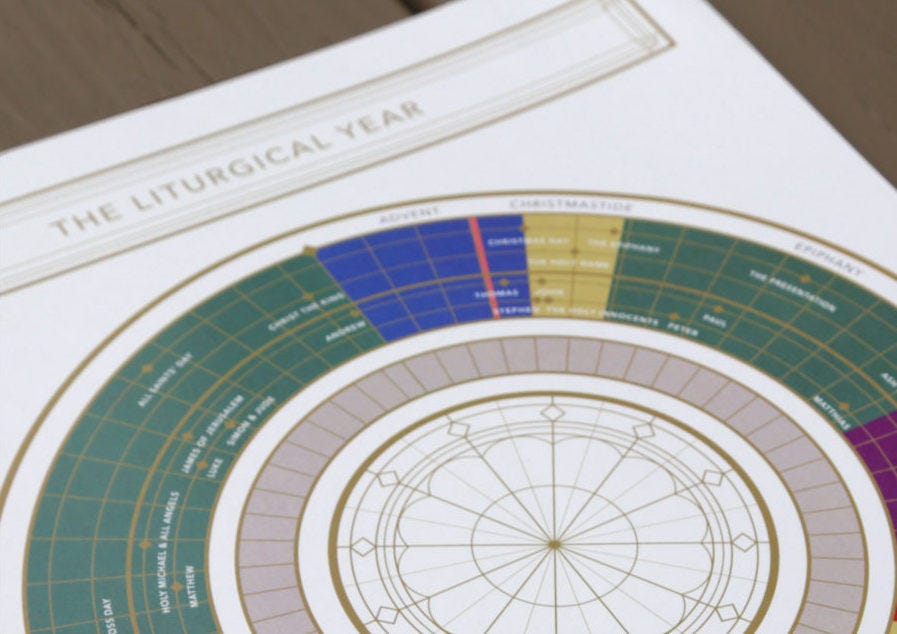
A newsletter about approaching the Church Calendar as an apprenticeship in Holiness.

Welcome to Rhythms of Habit, a newsletter about approaching the Church Calendar as an apprenticeship in Holiness. As we live out the Christian Year together, three types of posts will be published:

  1. Introductory: these posts explain how following the calendar is good for your growth as a Christian. The first three of these are free to everyone, and help give a foundation for why you might want to start following the Church Calendar.

  2. About the Church Calendar: these posts share the history of the church calendar, some things that are helpful to know, and help answer common questions. Why do we celebrate saints? What is Epiphany really about? How did these seasons develop? What is a Triduum?

  3. Holy Day / Holy Season Reflections: these posts are the real core of the newsletter. As we encounter Holy Days and Holy Seasons, you will be given habits to consider adopting that are rooted in what is being celebrated on that day or throughout that season.

If you are new here or new to the Church Calendar, you may want to explore the free introductory posts in this newsletter. Think of these as the introductory foundation of the newsletter.

More of these Introductory posts, along with many About the Church Calendar posts will be sent throughout the year to subscribers.

But here is the real core of the newsletter: Holy Day and Holy Season reflections.

As we progress through the Church Calendar year after year, reflections on major and minor Holy Days will be shared. Yes, you will learn more about the calendar itself. But more importantly you will be given daily or seasonal practices and habits to adopt that can be used as you seek to grow in Christ. You can find a free preview of these sort of reflections here: Feast of St. Joseph.

Free subscribers have access to some of these posts throughout the Church Year. If you like what you are reading, consider becoming a paid subscriber to make sure you receive all new reflections as they are published, and gain access to reading all old reflections, too.

In addition to (hopefully) being helpful and informative, this newsletter is also a means of finalizing the draft of my next book, called Rhythms of Habit: The Church Calendar as an Apprenticeship in Holiness. Join me along the way to get a first look at much of the content of that book!

Rhythms of Habit is a reader-supported publication. To receive new posts and support my work, consider becoming a free or paid subscriber.

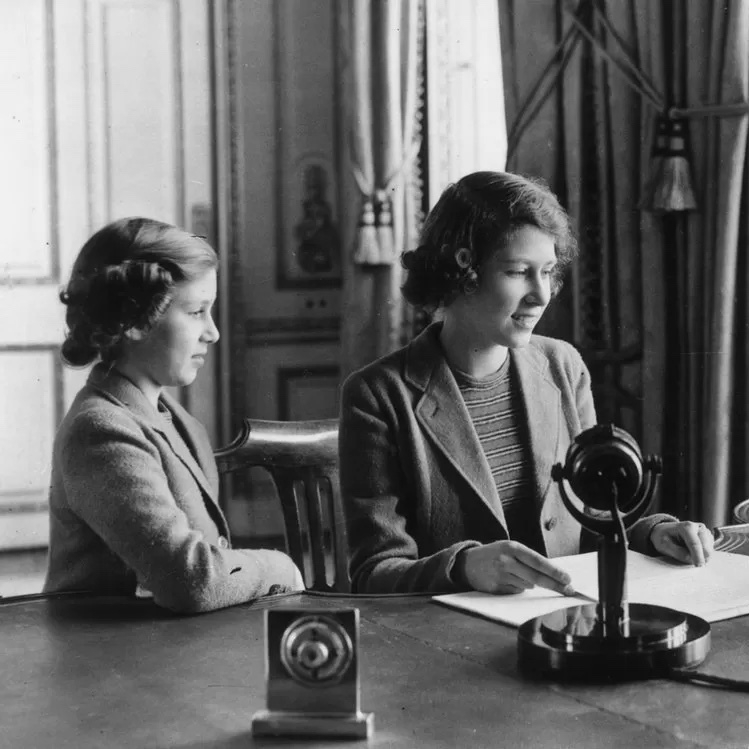
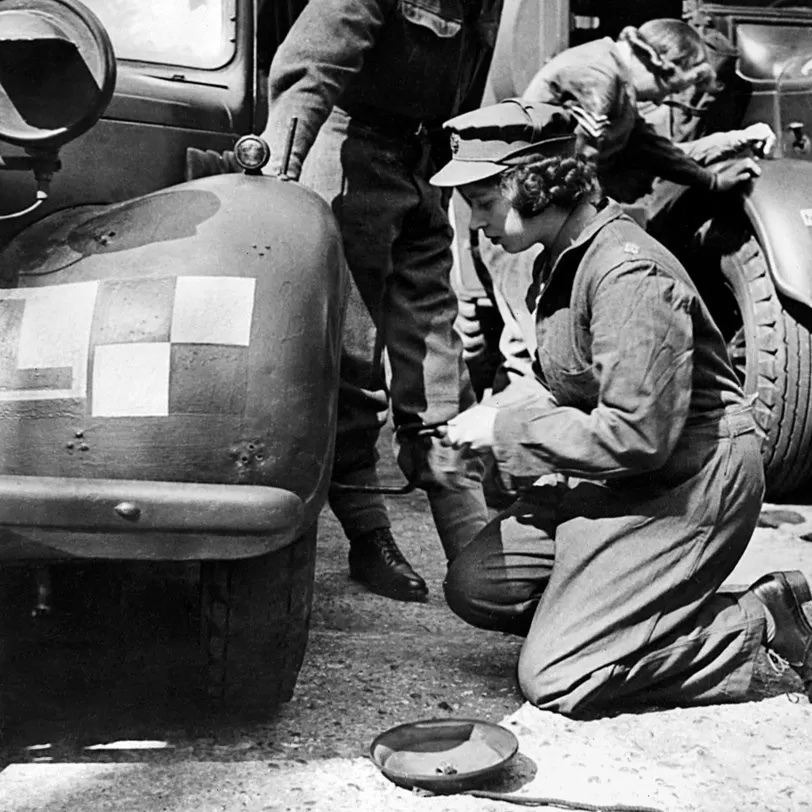
Rest in peace, and rise in glory, Elizabeth II.

The late Queen Elizabeth II played the hand she was dealt about as well as it could possibly have been played, and this required her to exercise virtues that few of our public figures today even know exist: dutifulness; reliability; silence; dignity; fidelity; devotion to God, family, and nation. We shall not look upon her like again; her death marks the end of a certain world. Its excellences, as well as its shortcomings, are worthy of our remembrance. (Alan Jacobs)

This is the moment George W. Bush heard that a second plane had crashed into the WTC.

FWIW: amateur comes from the Latin (via French) amatorem: lover.

An amateur does a thing primarily for the love of that thing.

Or put another way: what we need most in moments of conflict are the humanities, and what we are offered instead is a dangerous parody.

My latest essay for The Living Church.

Two Football Notes

  1. With more Americans playing in top flight European leagues than ever, and performing especially well in the Premier League, it is hard to not let USMNT World Cup anticipation and expectations grow every weekend. Sure, it could all be a set up for an extremely disappointing winter. But it could also be the preface to a thrilling run deep into the knockout rounds.

  2. The Premier League is off to a fascinating start. (Come on you Spurs!) Yes, we won’t be through August until this weekend’s matches, but it is an interesting opening month to say the least. Leeds, Liverpool, Man U, and Man City all with welcomed surprises. Things are just getting started. Remembering back to last season: Tottenham at the top and Arsenal at the bottom at the end of August. They finished the season 4 and 5, respectively.

Rich Mullins was the greatest of the 90s era evangelical musicians. (If you know the era, you know the era…)

I often find myself thinking through lines still engrained in my head from songs like this one.