
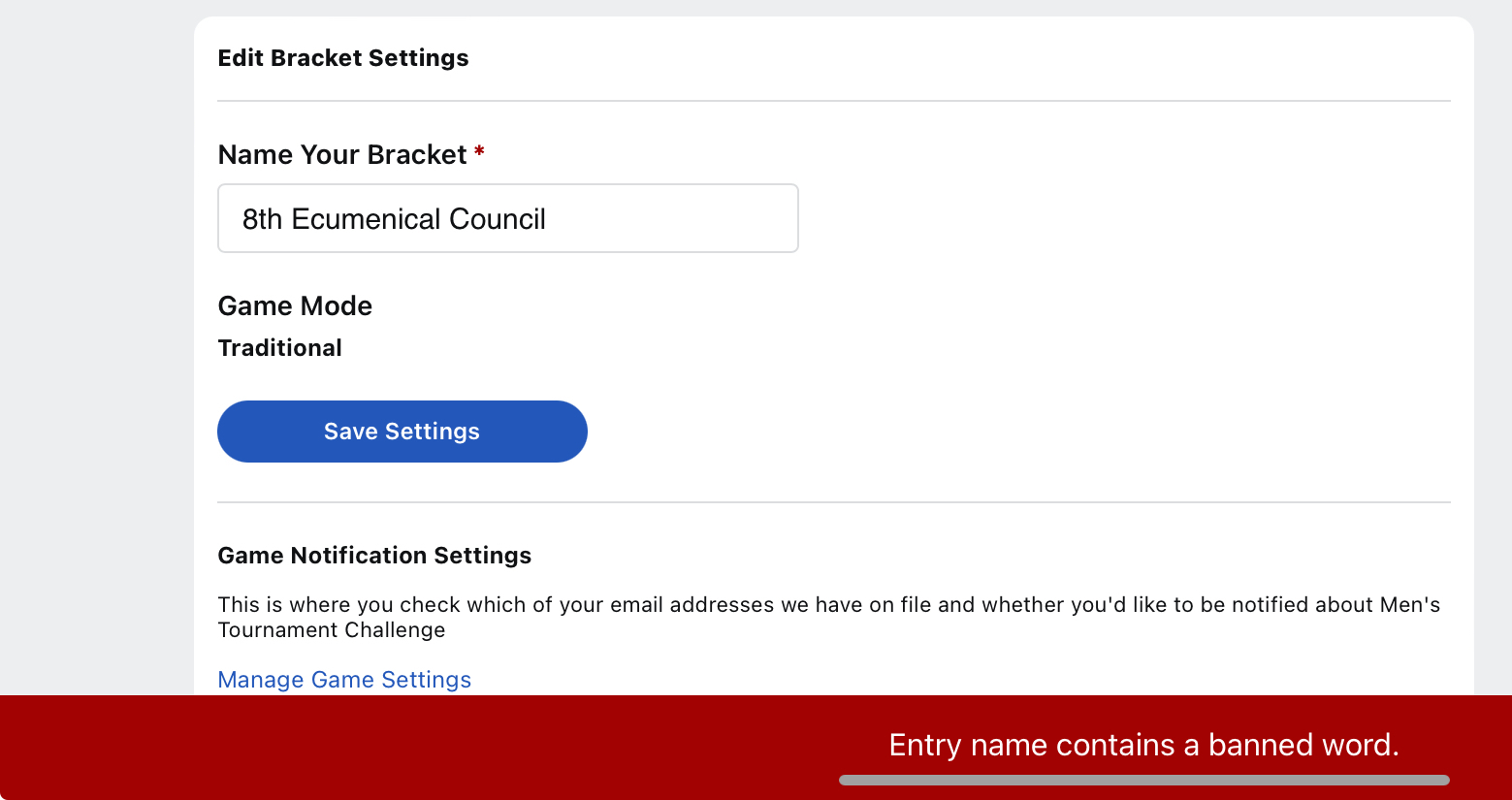
Banned word; which one? 8th? Ecumenical? Council?
Guess I’ll have to move on to my backup name for this year’s bracket: Oro Pro Bracketus.
Working towards maintaining Inbox Zero while using an “as minimal as possible” setup for Apple Mail that I recently stumbled upon. What you can’t see in the screenshot is the Grayscale mode that remains enabled for MacOS, since screenshots ignore Color Filters.

An Ash Wednesday 2024 sermon for my parish and letter for my school community, prepared as we embark on another Lenten season together. This one comes with a reminder that Lent is not the Thing itself.
A lesson for all those who ever have to save and submit things online: USMNT forward Duncan McGuire’s deal to play in England this spring is now gone, following an unsuccessful appeal by Blackburn.
Blackburn thought they had clicked “submit paperwork” on the English Football League’s transfer system before the deadline but had actually hit “save”.
The result was there in the end, and it was thrilling attacking soccer as promised. Three goals within ten minutes of the second half kickoff. What a dream first season under Ange.
Paideia for Preachers—a new regular column I am writing for the Covenant blog of The Living Church—debuts today. If you find yourself teaching or preaching in any number of contexts, these regular glimpses into the Art of Rhetoric from ages past might help.
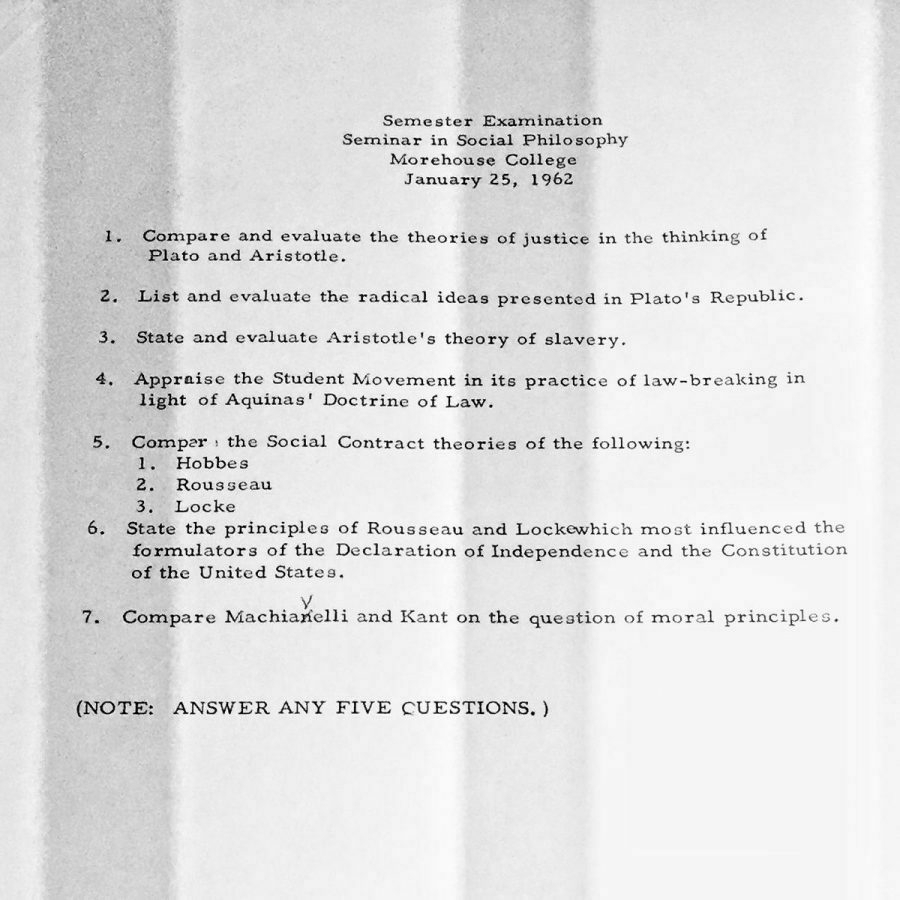
This is the final exam for one of the Rev. Dr. MLK, Jr’s courses at Morehouse College. I am encouraged by how similar it looks to the sort of exams our Rhetoric School students take, but discouraged by how it differs from our nation’s most common forms of assessment at similar levels.
We did not stop to ask why; we have been had.
When you used to store your family photos in physical albums, and then you were convinced to store them all on a hard drive, and then you were convinced by a large for-profit company to store them in the cloud for free, until the cloud became the only place your photos were stored, and the company decided to charge a monthly fee in order for you to continue to store all of your photos online, you have been had.
When you cannot imagine leaving home for an errand, a day of work, or a vacation without a device that did not exist throughout all of human history until the twenty-ninth of June ano Domini 2007, you have been had.
When large for-profit companies spend significant marketing money to convince you to adopt their flagship product for free, you should stop to ask why.
When a social media app invites you to choose who to follow—giving you the semblance of choice and control over the information you ingest daily—and then decides to decide themselves which of those posts you will see—and when—while also showing you content from people and companies you have not followed, you should stop to ask why.
The first step is recognizing that you have been had. The next step is using that recognition as motivation to more quickly stop to ask why the next time you see something shiny in the world of technology.
It turns out this isn’t the first time that Ange’s first season at a new club has resulted in a host of hamstring injuries. I guess it makes sense that high-line front-footed Angeball takes some getting used to!
Large Language Models and the Art of Rhetoric
Many people are using large language models to write for them because they are acutely aware of their own deficiency in the art of rhetoric. But here is the rub: relying on these tools because you are already deficient in the art of rhetoric only makes you increasingly so.
Multiply this out on a societal scale, and the outlook becomes even more bleak. Imagine communities of people who already have trouble thinking and communicating clearly about things that matter choosing to outsource their thinking and communication to a tool that can’t think. It does not take much of a leap to see why this is a dangerously opposite direction from where we ought to be headed.
Now that the cat is out of the bag, the only remedy might be a form of resistance: a counter-community that chooses to reject the tool altogether out of principle, and that seeks to encourage others to do the same.
Count me in.
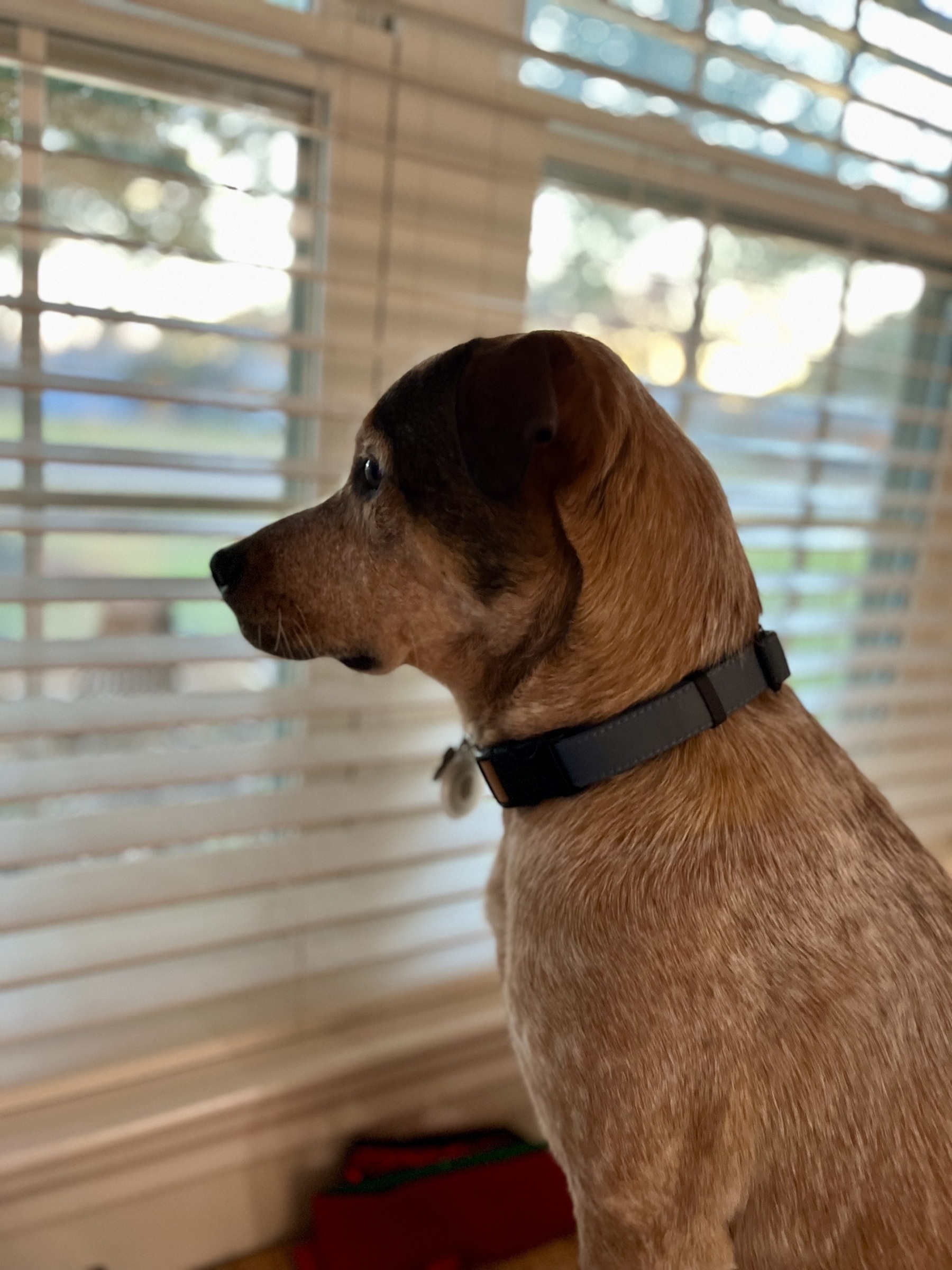
This is the face of a dog who loves his new family, but is still learning that when a member of that family leaves, they will come back eventually.
We have also settled on a name for our sweet Blue Heeler mix: Bandit Dunny Jordan. A nod to our family’s elementary sense of humor and our love for Bluey.
Baptized in the Jordan River
You don’t have to travel across the world
to be baptized in the Jordan River;
only through the space time continuum.
By the power of the Spirit of God
The still clear bowl of the modern font
Becomes the flow of that ancient water;
Cleansing you as it was itself once cleansed
by him who came after and yet before.
“This is my beloved,” the voice beckons,
Echoing from those first century shores,
And into our very own, and beyond.
Calling out to the called out ones, it rings
Truer than our own truths we held so dear
Before we, too, were brought through that River.
Currently reading: Life Is a Miracle by Wendell Berry 📚
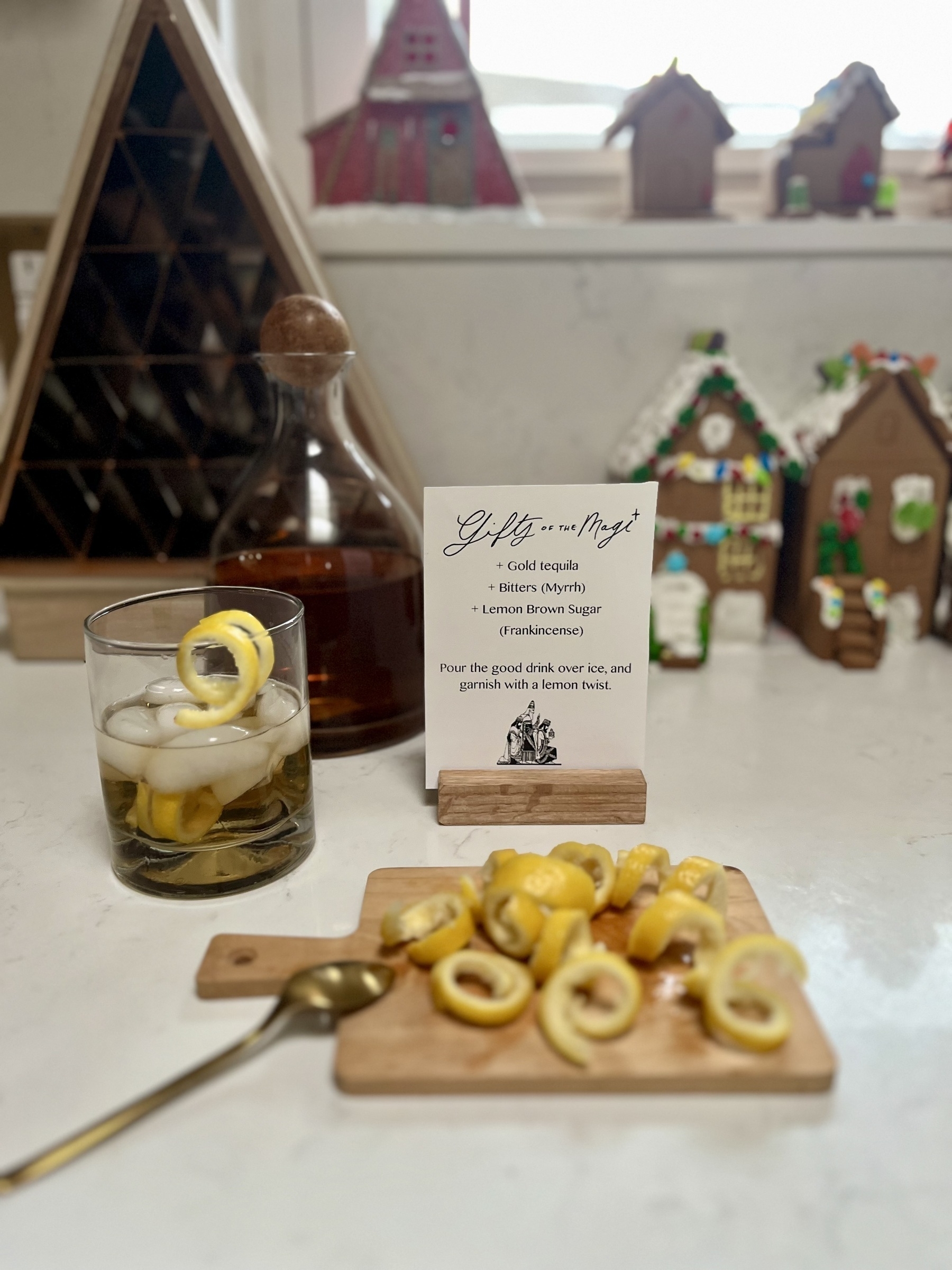
A blessed Feast of the Epiphany!
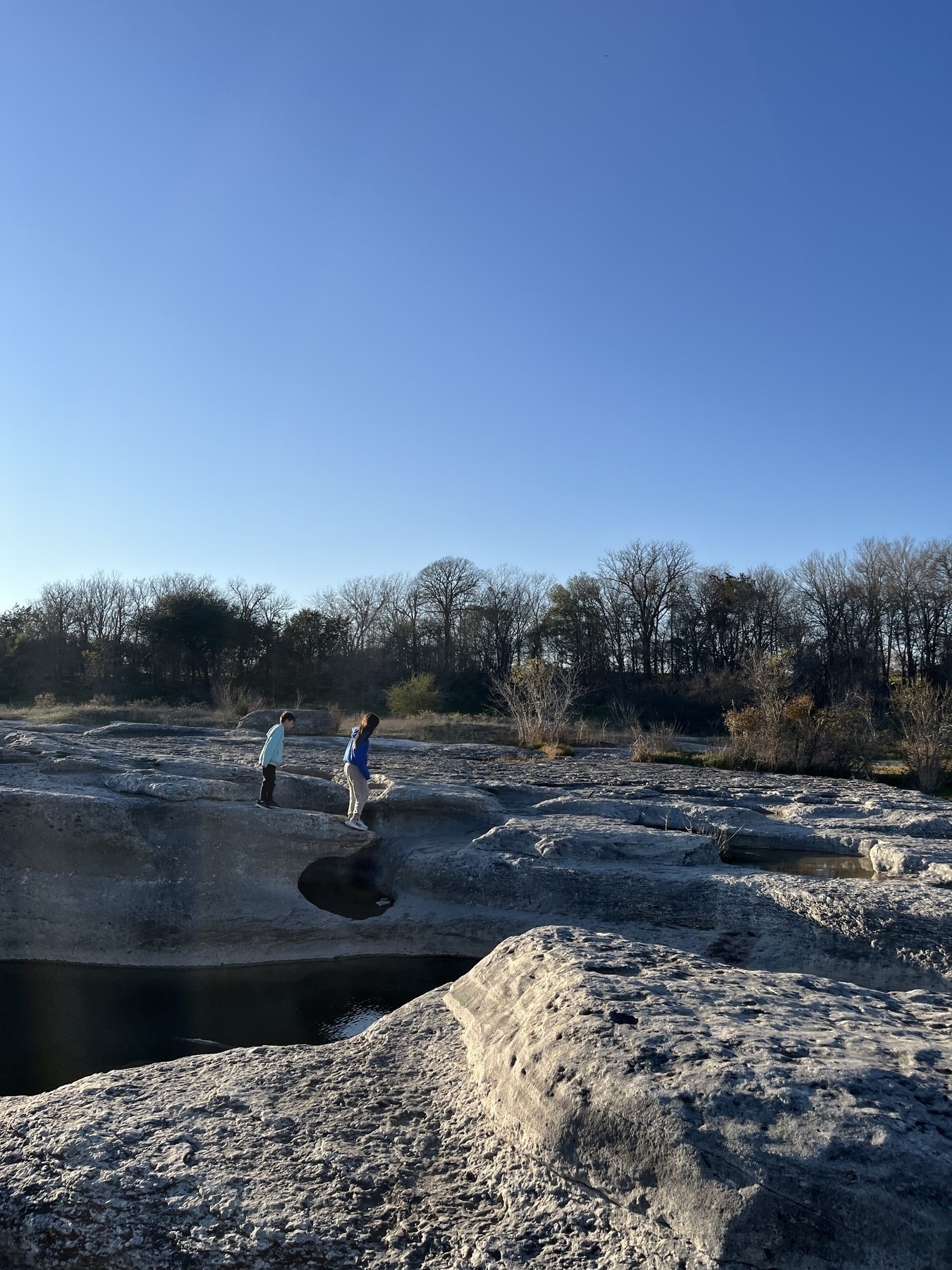
The landscape of the Lower Falls at McKinney Falls State Park “looks like something out of Star Wars,” according to our kids. They aren’t wrong.
Before reading his newest Christmas Poem, Malcolm Guite comments on a glass of scotch on his desk:
“It’s a Bunnahabhain—12 years old—it gives you the impression you exist.”
Relieved
The sun remains set
but we are both awake.
You more anxious than me
To go outside.
It isn’t until I feel the chill of the air
That I realize
You aren’t the only one
Who has been holding it all night.
“What’s the difference,” I ask
“Between this and a camping trip?
You know the kind
Where a shovel counts as outdoor plumbing
And you’re grateful for
The softness of a leaf?"
So I make my way to the fence
And with a nod of understanding
And a wag of your tail
You leave
Me alone with my thoughts.
Moments later we both return inside,
Relieved.
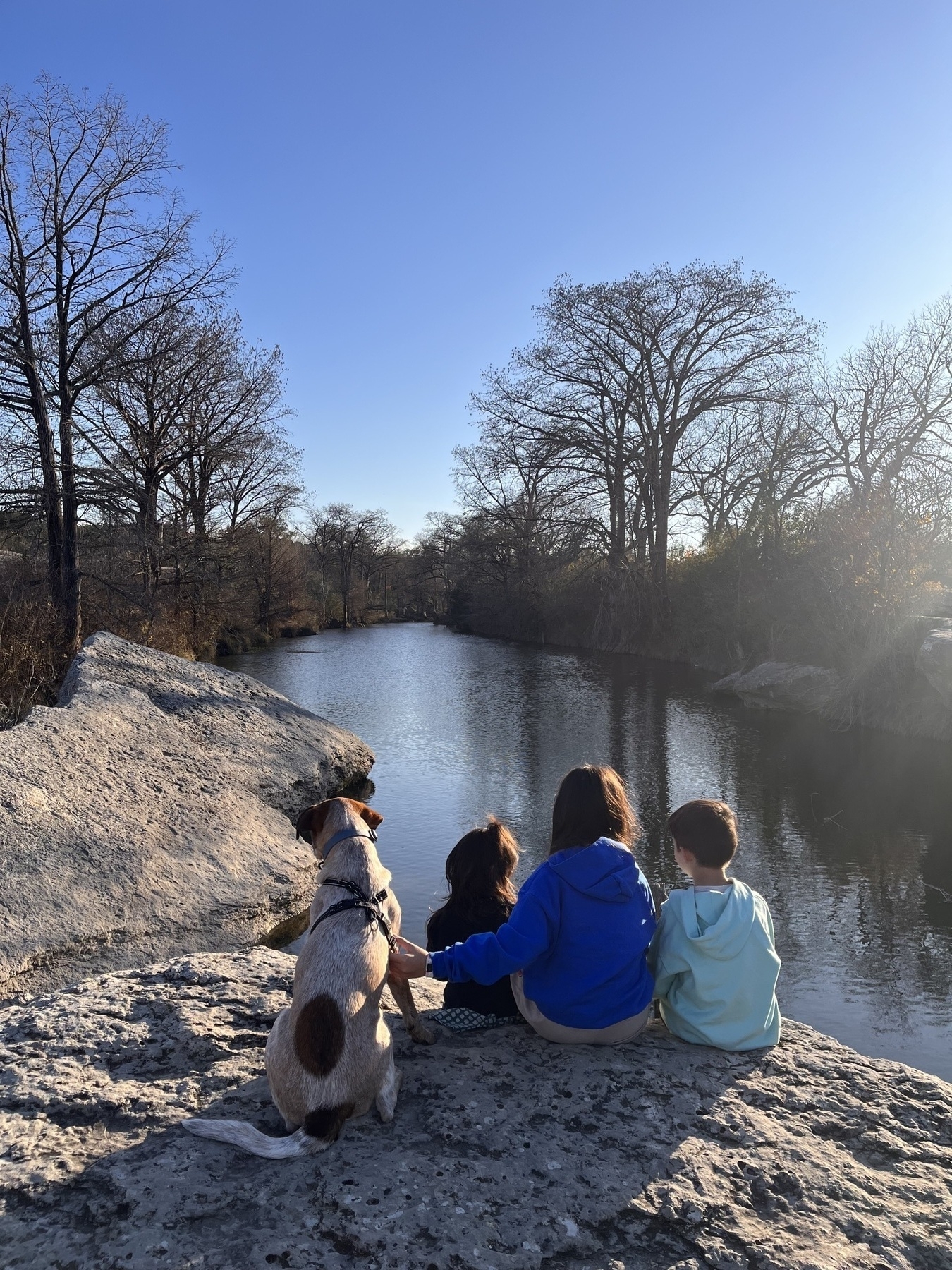
First family hike of the new year, and our first with Bandit! McKinney Falls State Park - one of our favorite spots in the Austin area.
The second half of Nottingham Forest vs Man U was exhilarating: a Matt Turner give-away that led to an equalizer, a Matt Turner save that led to a successful counter attack, three bold one-touch strikes, and Nuno guiding Forest to their first victory over Man U in nearly three decades.
I have moved all of the content from Substack to Micro.blog for my forthcoming book on Virtues and the Church Calendar. The Substack funds were helpful, but I would rather have the content available to all, and rely on some folks opting to buy me a moment (or two) to write!